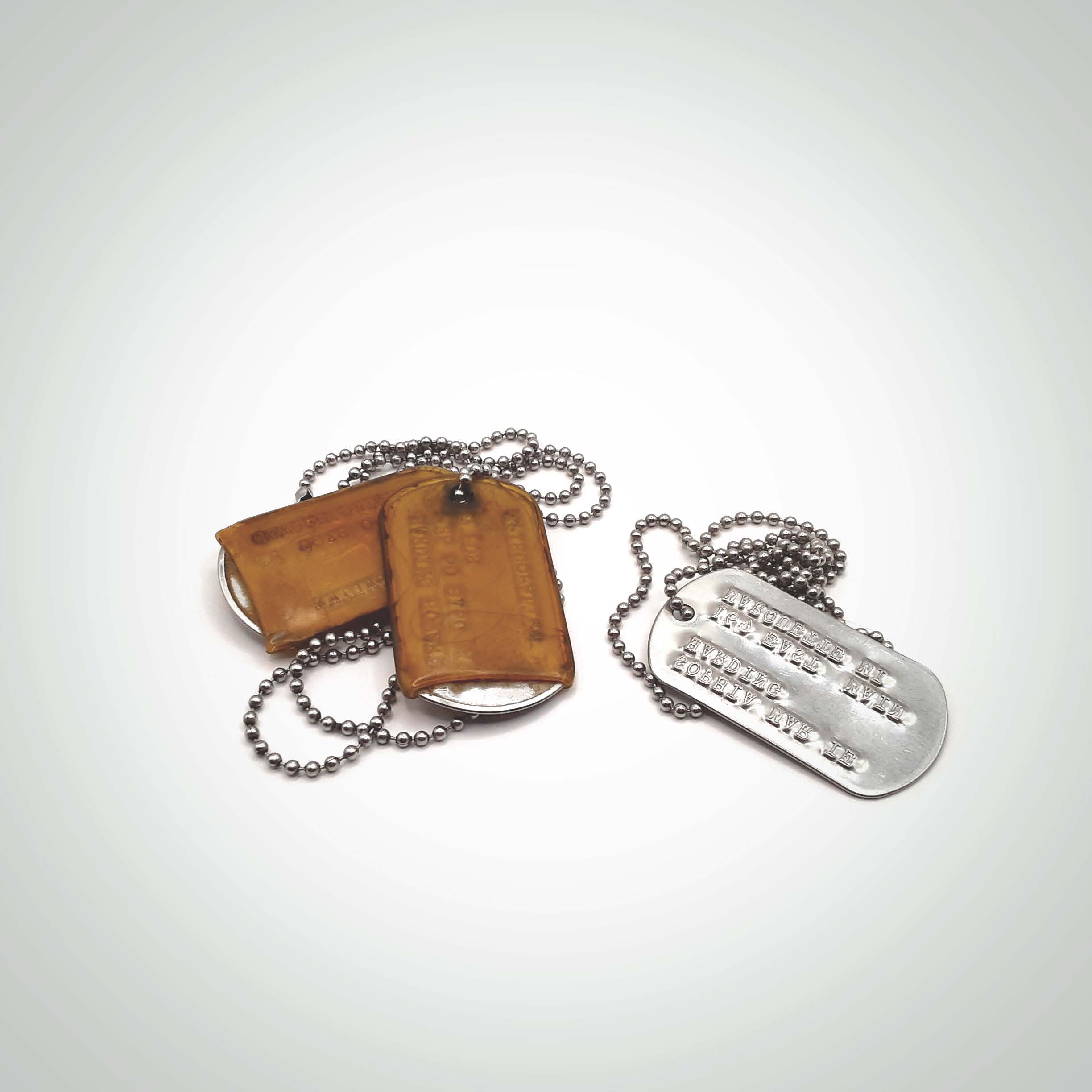
Dogtags came into usage in the Miliary shortly prior to the World Wars. Soldiers were issued dogtags in pairs: one to be left on the body as identification if they were killed; one to be brought back to the base as proof of death if the body had to be left behind. By Vietnam, the tags held the owner’s name, blood type (in case of medical need), and religious affiliation (in case of death). They were frequently covered in dull plastic sleeves so that they wouldn’t clink or reflect light at inconvenient times.
When I was still in Elementary school, the recently decommissioned local Air Base had essentially a “show and tell” day with an old B-17 bomber. A B-17 is, at its most basic, a wide set of wings filled with fuel attached to a narrow tube with enough room for a few small guys to be crammed into the nose area—pilot, co-pilot, navigator, and bombardier, a fourth guy to twist himself into the gun-turret, plus several waist gunners and a tail gunner. The vast majority of the rest of the room was taken up by the Bombay and associated bombs. There wasn’t much room for visitors, so the line to see the inside was long and slow-moving. The organizers of the day had set up a dogtag-making machine for the entertainment of those of us standing in line. They’d put anything you wanted on your dogtag. I chose information I figured would be useful, and wore that tag for several years whenever I was traveling.